2 years and 700 members: insights from Convoclub
The top 5 challenges that conversation designers face, based on 300 real answers.
I’m really proud to announce that we just welcomed our 700th member into our Convoclub community!
When I started Convoclub in late 2021, I knew I’d love to have a space where I could meet other conversation designers, share knowledge and insights, and basically create a safe space for learning and growing. Fast forward 2 years and I can certainly say that that space is real, with meetups, some online courses (yes, I know, I’ve got more in the pipeline), a rather long list of resources, but most of all: a community of people that learn, support and grow together. It’s been such pleasure to see real connections being made, and get to know so many of you!
Challenges for conversation designers: insights from real designers
Now, when you onboarded Convoclub, I asked each of you the same question: “What challenges do you face as a conversation designer?” And in the last 2 years, more than 300 conversation designers answered that question. So let me share some insights from those 300 answers, and present to you the list of top 5 challenges that we face.
1. Perceived knowledge gaps (aka Imposter Syndrome)
Most of us struggle with perceived knowledge gaps when it comes to conversation design concepts, processes, and tools. There’s just so much to learn, and it feels like we’re never done mastering the latest platform, technology, and of course, getting our heads around this whole LLM business. Staying up to date and feeling like we have to study 24/7 leaves us in a rather exhausted state of ‘will I ever get the hang of this’?
“Love my job. Will I ever be good enough?”
What’s striking, is that this occurs throughout the entire community, regardless of level of experience. And yes, I’m one of them too of course. I even created an online course on how to handle your inner imposter. Free, on Convoclub :-)

2. Navigating immature tools and standards (plus some advice for vendors)
With conversation design still emerging as a mature design discipline, we often face issues with inconsistent tools, workflows, analytics, and data. Standard practices have yet to fully solidify, so advocating for and contributing to tool evolution and process improvement is crucial to take our profession to the next level. And yes, spreadsheets and flowcharts were mentioned, both as problem causers and solutions!
“We have to change mindsets to thinking about how the customer experience drives the technology and outcomes. Not how the tool drives the experience.”
My advice for vendors would be to include conversation designers at every step of your design process (in a paid position, but that goes without saying, right?) We tend to learn very fast (see item 1), and our organisations realise that, too. More and more, you’ll find us at the table when it comes to selecting our next platform, setting the requirements and evaluating your software solutions. So why not take advantage of our expertise when you’re designing our tools? We’d love to help!

3. Aligning with Stakeholders and Clients
Communicating the value of conversation design and managing expectations of our stakeholders… The struggle is real!
“Conveying the value of great conversations to the client and the significant role the conversation designer brings to a company.”
We spend a considerable amount of our work time educating leaders and clients on the role and impact of conversation design aiming for closer collaboration across teams. Yet, we don’t always feel we’re as successful as we wish we could be. Especially in teams that are tech-heavy, with a chatbot project that has their roots in AI, it can be a real struggle to get buy-in for our work.
4. Crafting complex conversations
Most of us seem to have a picture of what an ideal conversational experience should look and sound like: natural, easy, dynamic, personalised. Yet in reality, designing sophisticated, nonlinear conversations can be hard. Not just because of technical constraints, but simply because conversation is complex.
“Multi-persona agents. How I craft an interaction is far different for a 20 year old than it is for someone in their 50s.”
Catching the unhappy paths, making sure that your conversations really flow, personalisation, weaving in the brand voice in such a way that it shines, designing for different modalities…it’s just not that easy!
5. Validating our designs and measuring success
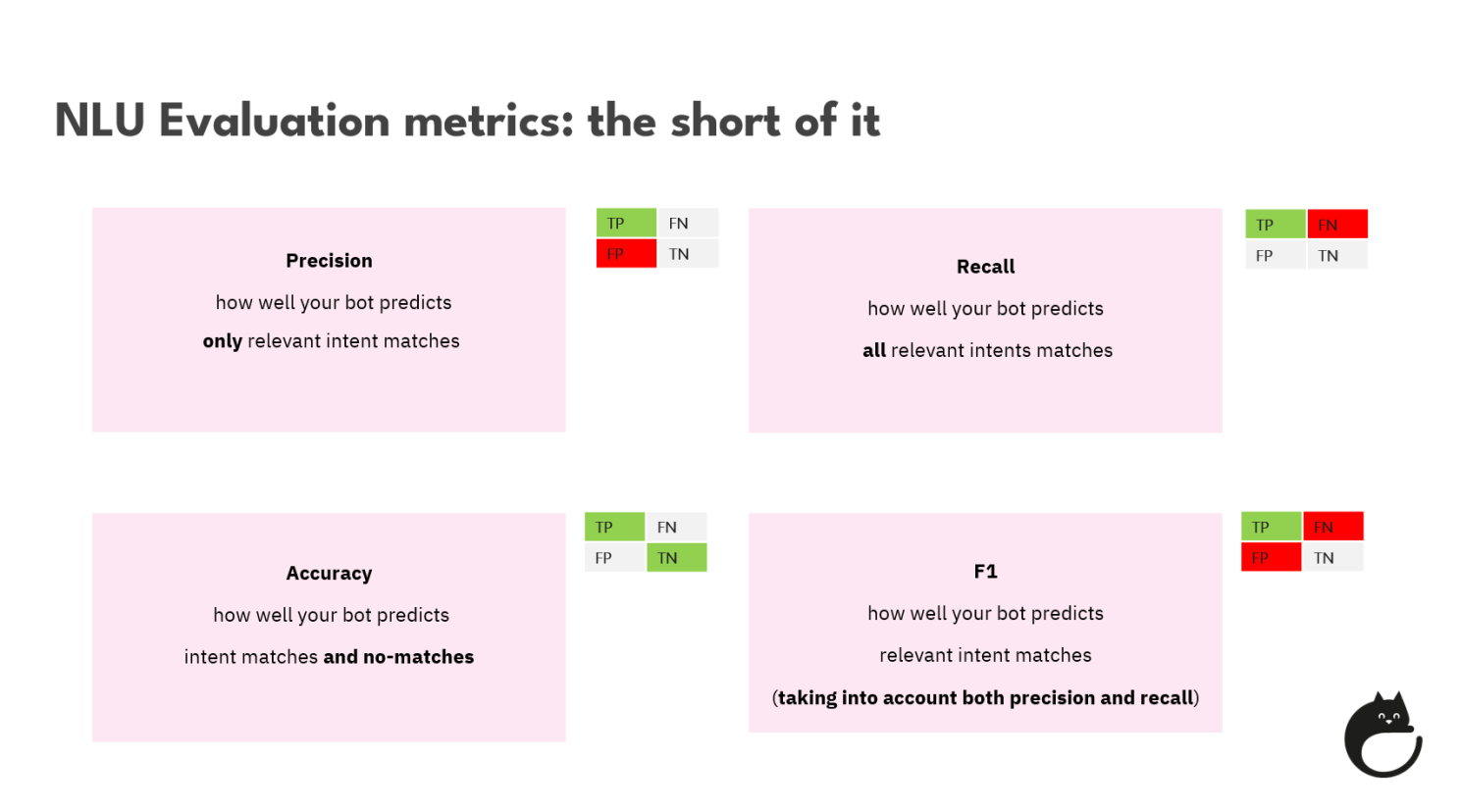
And even if we feel that our designs are the best we could do, we face one final hurdle: evaluating them after go-live. It’s quite sad to read how many of us are not in the position to collect even the most basic insights in how our designs are performing.
“I’m stuck on a platform where getting the desired analytics (deflection rate) is downright impossible.”
Measuring end-to-end journey success, in particular, seems to be hard to do, and NLU optimisation is still very much a manual spreadsheet analysis for many of us. Our dashboards are disconnected from each other, we feel we’re measuring the wrong KPI’s, we don’t have enough time to do proper analysis…and somehow, we don’t seem to be able to turn this around.
But also…we love our job!
One other central theme that emerged from your responses is our passion and our determination. We love what we do, and we’re determined to make things better for our end users. In that light, perhaps we shouldn’t think of this list as challenges, but as potential for growth and advancement in our profession that we all love so much. And hopefully this list will show you one thing: you’re not alone in your doubts, there’s a whole community that can relate!